The greatest British light heavyweights of the modern era
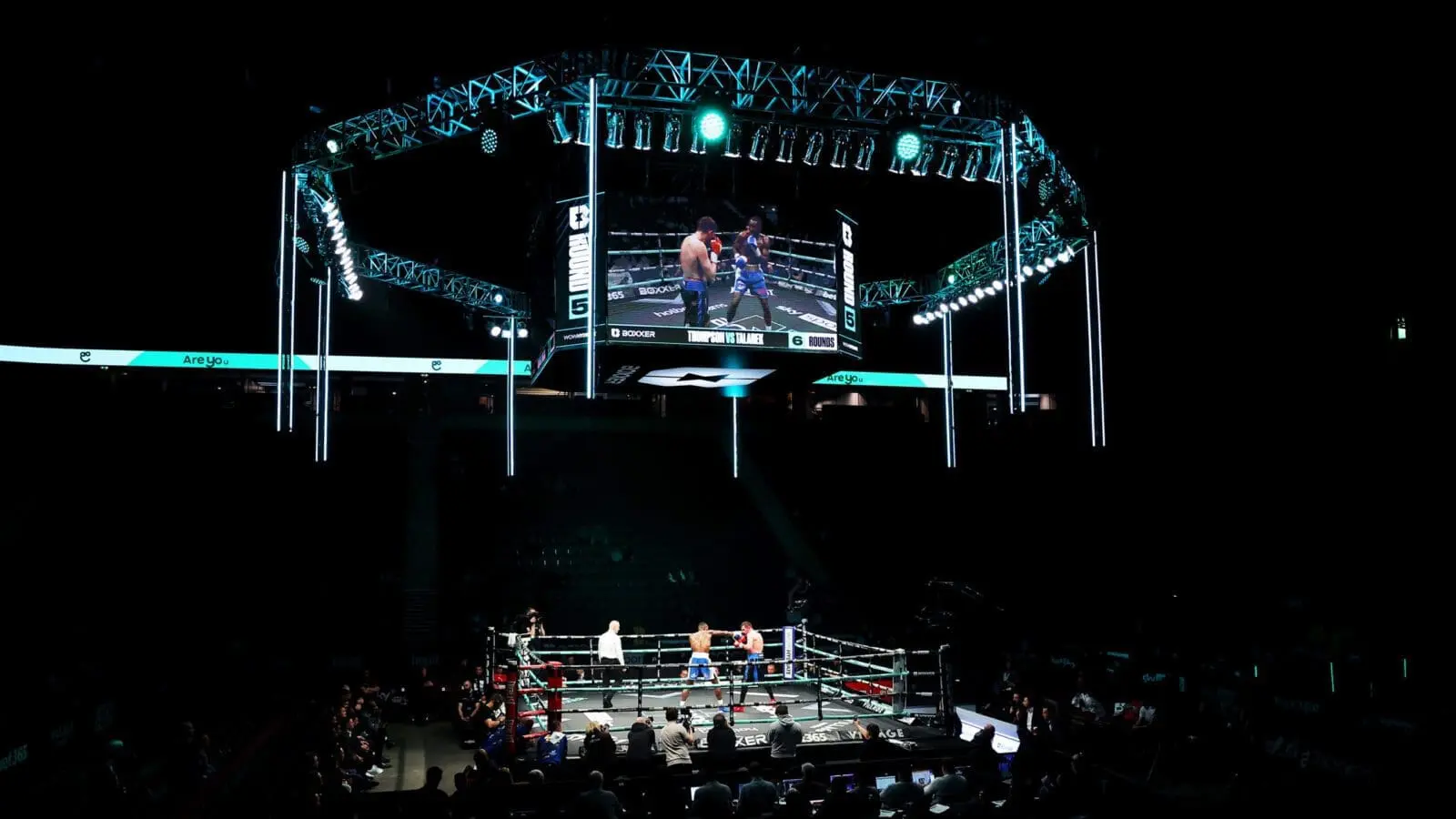
British light heavyweights are in focus as we ease into 2024, with two fights in particular putting the 175-pounders under the microscope. First, Callum Smith travels to Canada to face the seemingly-unbeatable IBF, WBO and WBC champion Artur Beterbiev. Then, to kick off February, two highly-touted unbeaten prospects meet as Joshua Buatsi faces off with Dan Azeez.
Upcoming Light Heavyweight Fight Odds
While Britain has had its greatest success at super middleweight and cruiserweight traditionally, the isles have produced some quality fighters at the weight in between. Trailblazers like Bob Fitzsimmons and Freddie Mills each reigned as the light heavyweight champion of the world.
The tap has dripped rather than gushed at the weight since, with top Brits usually filing into the 168lb or 200lb categories instead. But Smith, Buatsi and Azeez still stand on the shoulders of some modern giants. Here are the stories of the best modern British light heavyweights.
John Conteh
The Scouse star did things in the traditional way in the 1970s, collecting European, British and Commonwealth titles before starting his assault on the world scene. It is a finishing school still used today. The Buatsi-Azeez clash will have the British and Commonwealth belts on the line.
After a second win over Chris Finnegan - himself a top light heavyweight of his day - to retain the trio of titles, Conteh moved on. Argentina’s Jorge Ahumada had a world title draw with the great Bob Foster on his record, but he couldn’t keep Conteh at bay. The Brit won a 15-round decision to capture the vacant WBC light heavyweight gold.
Conteh made three successful defences, the most famous of which was a 1976 decision over Hall of Famer Yaqui Lopez. Proving boxing politics are nothing new, Conteh was stripped of his belt for refusing a defence against Miguel Cuello in Monte Carlo.
He would box thrice more for the belt he never lost. But new champion Mate Parlov and successor Matthew Saad Muhammad would each defeat him, the latter doing so twice. Conteh retired in 1980, after knocking out James Dixon in five rounds.
Dennis Andries
The term “underrated” gets thrown around so much in a sporting context that it has lost all meaning. But Dennis Andries appears far less in rankings of the best of British than he should. 49-14-2 doesn’t scream “all-time great” on paper but after a slow career start, Andries enjoyed a tremendous campaign.
‘The Hackney Rock’ failed in two shots at the British title before capturing it at the third time of asking. Andries’ 26-6-2 record won’t have struck fear into WBC champion J.B. Williamson. But it should have done. Andries cut Williamson at the midway point and registered a late push to take the belt on a split decision.
A ninth-round knockout of fellow Brit Tony Sibson followed. The Leicester man had once shared a ring with Marvelous Marvin Hagler, which shows the sort of company Andries was keeping. ‘The Hackney Rock’ would lose his title to Hagler’s great rival, Thomas Hearns, in his next bout. But Andries was far from done at title level.
After an impressive winning streak that included a victory over former and future world champion Bobby Czyz, Andries secured another shot. Tony Willis was knocked out in five rounds in Atlantic City for the vacant WBC light heavyweight title. But Andries would endure another short reign, losing to Australian great Jeff Harding in his first defence.
The pair would meet in a rematch a year later, where Andries won his third title in a thrilling seventh-round knockout victory. After two defences, Andries and Harding renewed hostilities. The Australian would take a majority decision, the title belt and the trilogy.
Andries would go 10-5 in a career epilogue that took him back down to British title level, this time at cruiserweight. Future record-breaking world champion Johnny Nelson knocked him out in seven rounds in his final fight, in December 1996. But at his peak, Andries had been one of the most exciting and decorated light heavyweights Britain ever produced.
Clinton Woods
British sport has always prized an underdog. The public in this country seems more trusting of flawed brilliance than it is of unimpeachable success. Which is why Clinton Woods resonated with spectators. The unassuming Sheffield pugilist captured British imaginations in a career spent mixing with the best.
David Starie leapfrogged him into world title contention in 1998, when he beat Woods for the Commonwealth super middleweight title. However, while Starie would become a creditable 168-pound nearly-man, the lofty peak of the 175lb division awaited Woods.
He had to walk through fire to get there. Woods met Roy Jones Jr at his otherworldly best in 2002. The Brit was knocked out in a whirlwind six rounds. But he would come again a year later.
Woods went to a draw with teak-tough Glen Johnson for the vacant IBF crown. His efforts earned a rematch, another close contest that this time went in Johnson’s favour. While the Jamaican went on to shock the world and stop Roy Jones Jr, Woods went back to the drawing board.
When Johnson’s title became vacant due to his accepting of a fight with Antonio Tarver, Woods finally made good on his promise. Rico Hoye was stopped in five rounds for the vacant crown. ‘Clint’ grew into his role as champion of the world, stopping Jason DeLisle, beating former champion Julio Cesar Gonzalez in two thrilling bouts and evening the score with Johnson, beating the latter by split decision.
Woods’ day in the sun would come to an end, with Tarver taking his belt by decision in 2008. He lost a title bout with new champion Tavoris Cloud the following year before retiring.
Joe Calzaghe
Were this a list of the greatest British super middleweights of all-time, Joe Calzaghe would top it without question. Were it a list of the greatest British fighters full stop, he’d also be hard to argue with. Calzaghe actually only had two high-level light heavyweight fights. But such was their significance and the stature of his foes that he lands on this list deservedly.
Calzaghe had enjoyed a career any fighter would dream of by the time he left the super middleweight division behind. ‘The Pride of Wales’ sat fourth on the all-time list for most consecutive title defences. Joe had held every sanctioning body title as well as The Ring crown. He had beaten luminaries such as Mikkel Kessler, Jeff Lacy, Chris Eubank, Robin Reid and Richie Woodhall. Most boxers would have been content to call it a career at a mammoth 44-0 and with that resume behind them. Not Joe Calzaghe.
The Welshman set off for the United States in search of a new challenge at light heavyweight. He found one in The Ring 175lb boss Bernard Hopkins. A bitter build-up which Hopkins steered into uncomfortable, racial territory was punctured by Calzaghe’s performance on the night.
Against the cagey, defensively immaculate Hopkins, Joe went to work. He had to climb off the canvas in the first round, catching a stray while attacking recklessly. But on an awkward and untidy night, his relentless activity saw him emerge victorious. Calzaghe won The Ring title via split decision in a virtuoso display.
Some dismissed the win because it came against a 43-year-old. But Hopkins would go on to unify two light heavyweight belts and break George Foreman’s record as the oldest world champion ever. ‘B-Hop’ still held world titles at the age of 49, making Joe’s win all the more impressive.
There was one demon Calzaghe still wanted to slay. During his super middleweight pomp, Calzaghe and Roy Jones Jr could never agree on a fight they insisted they both wanted. In 2008, just months after the Hopkins win, Calzaghe would get his man.
Jones admittedly wasn’t what he once was. But after defeats to Antonio Tarver and Glen Johnson, he had rebuilt with three victories. A throwback decision win over Felix Trinidad put his name back on everybody’s lips and the Calzaghe fight was signed.
Unbelievably, Calzaghe once again got too eager and was knocked down in the opener. But unlike the tactical Hopkins affair, ‘The Italian Dragon’ went on to dominate. Calzaghe even borrowed some of Jones’ old showboating moves from his heyday on the way to a unanimous nod.
Calzaghe retired in the aftermath as a 46-0 two-weight world champion. Very few fighters have such a perfect retirement. Fewer still stick to it. But Calzaghe has never been tempted back, secure in the fact he built an incredible and enduring legacy.

Nathan Cleverly
Incredibly, fellow Welshman Nathan Cleverly emerged from the same tiny gym as Joe, run by the latter’s father, Enzo Calzaghe. The time spent learning from both Calzaghes stood Nathan in good stead for a career at the top of the sport.
A solid domestic grounding that involved Commonwealth, British and European honours stood Cleverly in good stead for bigger things. A win over contender Karo Murat helped secure them, as he won the WBO interim title against Nadjib Mohammedi in his next fight.
Cleverly’s title would be upgraded to the full version by his next contest, a fourth-round TKO of Aleksy Kuziemski. Nathan’s most famous bout followed, when he beat future world champion Tony Bellew by majority decision in an absolute thriller.
The Welsh star racked up three more defences before succumbing to Sergey Kovalev in four rounds. A shocker at the time, Kovalev went on to become a pound-for-pound contender in the years that followed.
Cleverly elected to rebuild at cruiserweight, winning two bouts by knockout before going into a rematch with Bellew. The Scouser wore the extra weight better than Cleverly and won a split decision. ‘Bomber’ was a natural cruiserweight and would go on to win the WBC belt at the weight. But Cleverly realised his future lay a division below.
A unanimous decision loss to Andrzej Fonfara threatened to derail his return to 175lb. But Cleverly landed an unlikely WBA title shot in his next fight, stopping Jurgen Braehmer in six rounds to become a two-time champion. He would be relieved of his title by Badou Jack the following year and the Welsh star retired. Cleverly’s career was one built on overcoming adversity and he did so admirably to reign twice as a champion.
Share Article


New customers only. Deposit via Debit Card & place first bet £10+ (1/1+) on Sports in 7 days. £30 Sports & £20 Acca Free Bets within 10 hrs of settlement. 7-day expiry. Eligibility, payment excl. & T&Cs Apply.